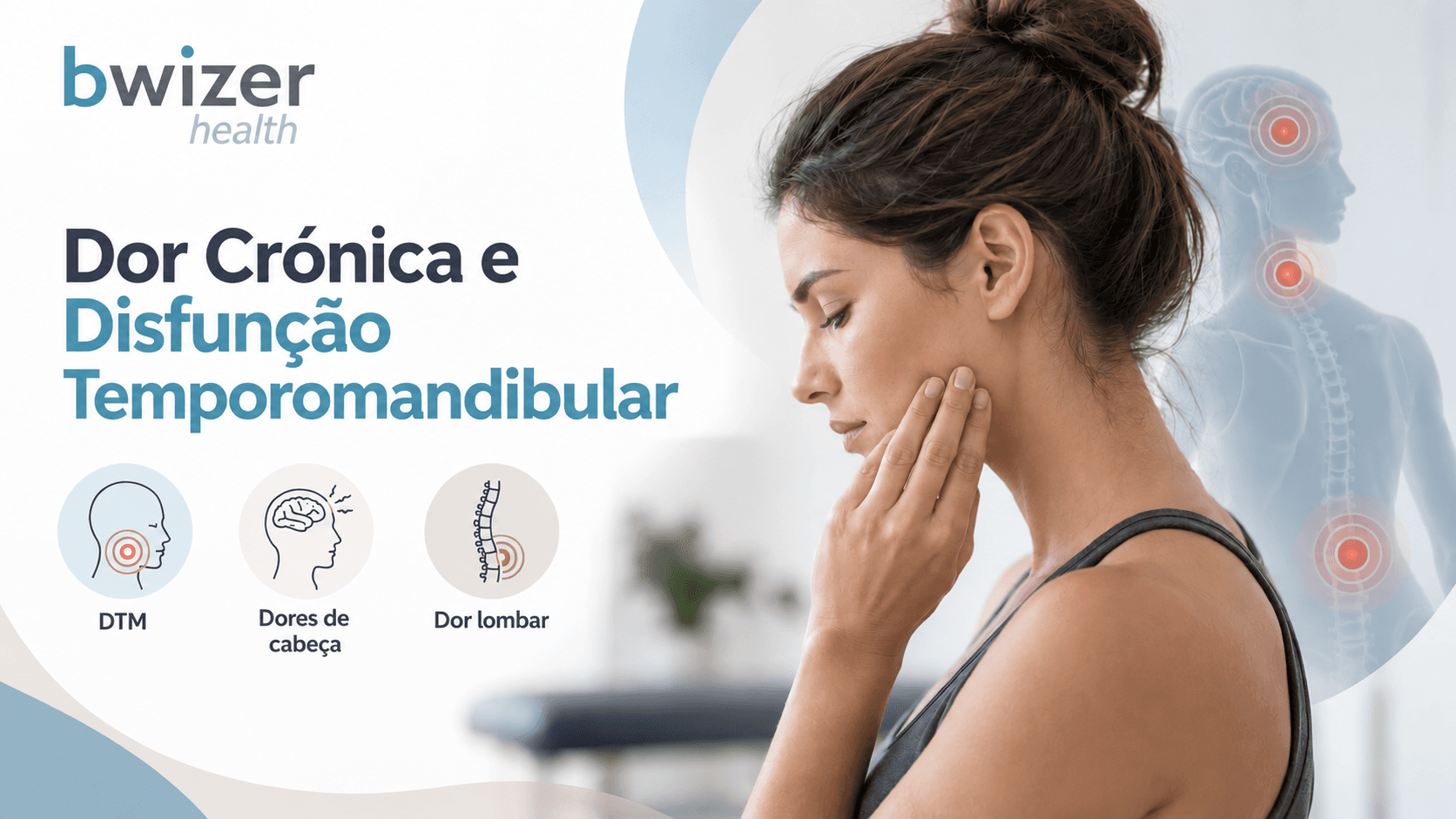
Jaw and neck pain: can they be related?
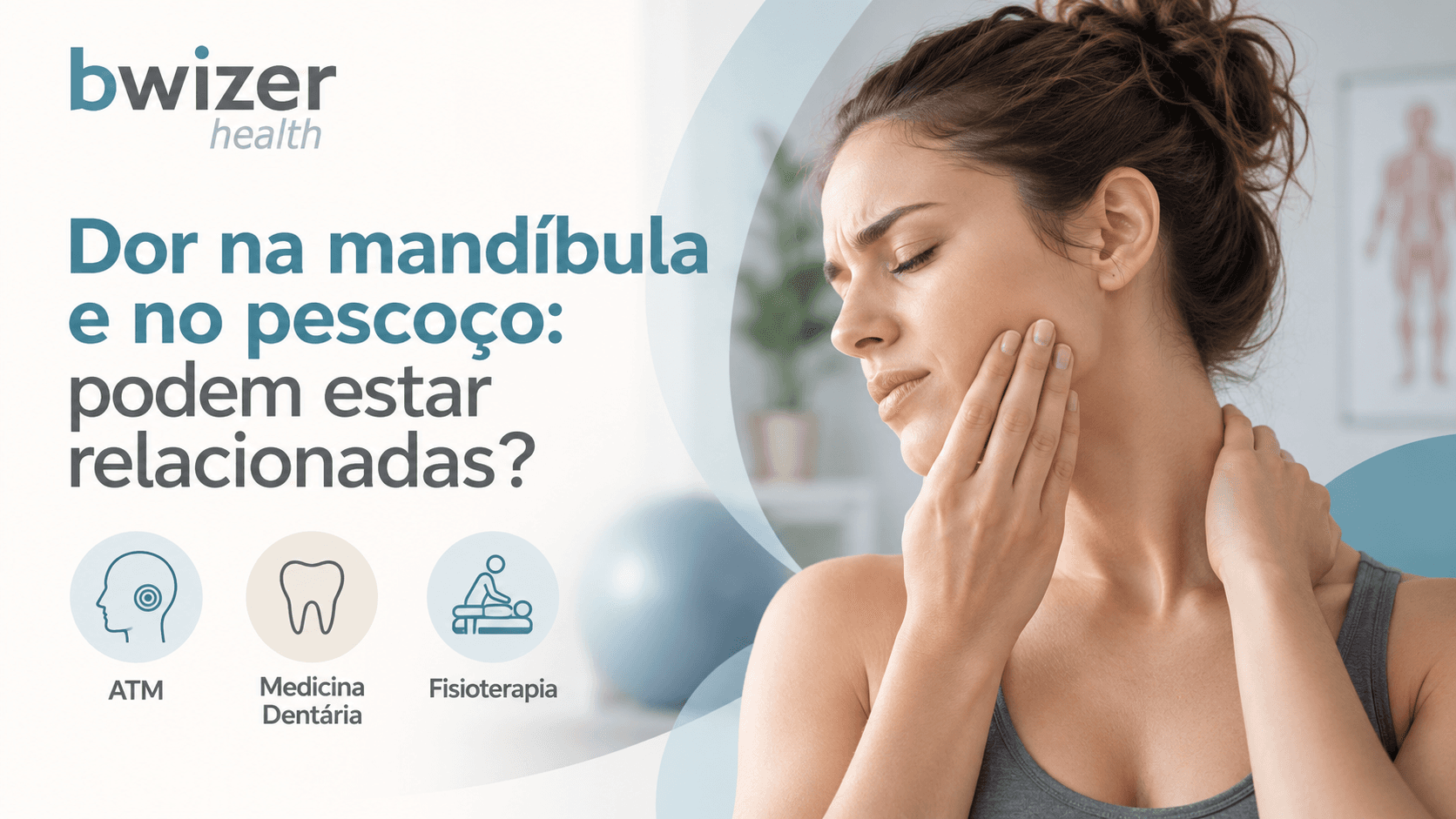
The short and clear answer is yes, jaw pain and neck pain can be related. For this reason, people seeking help for jaw discomfort, pain, or even clicking may also report neck stiffness or pain, muscle tension, and frequent headaches.
The short and clear answer is yes, jaw pain and neck pain can be related. Jaw pain - often referred to as “pain in the jaw” - can be associated with different conditions, including Temporomandibular Disorders (TMD).
Temporomandibular Disorders (TMD) encompass a group of musculoskeletal and neuromuscular conditions that affect the temporomandibular joint (TMJ), the muscles involved in chewing, and associated craniocervical structures. For this reason, people seeking help for discomfort, pain, or even clicking in the jaw may also report neck pain or stiffness, muscle tension, and frequent headaches.
How do the jaw and neck affect each other?
The close relationship between the jaw and neck can be explained by anatomical, neurophysiological, and biomechanical mechanisms:
- Neural connection: pain signals from the face and jaw (carried by the trigeminal nerve) and signals from the upper cervical spine (C1 to C3) converge in the same processing centre in the brainstem, known as the trigeminocervical complex. This convergence helps explain why, in some people, symptoms in the cervical and orofacial regions may coexist or be difficult to distinguish.
- Coordination of movement: movements of the jaw, head, and neck are coordinated, and the function of these regions can influence one another. Whenever we open or close our mouth, small automatic and coordinated movements occur in the head and neck, relying on the cervical muscles to maintain postural stability.
- Changes in the cervical region: people with TMD frequently present with lower endurance of the neck extensor muscles, reduced cervical spine mobility (hypomobility), and greater perceived neck-related functional disability when compared with people without TMD.
The partnership between Dentistry and Physiotherapy
Orofacial pain is multifactorial and complex. For this reason, the assessment of jaw and neck pain often extends beyond the oral cavity and may require a multidisciplinary approach.
This is where an important partnership for your health comes into play: collaboration between the Dentist and the Physiotherapist.
The role of the Dentist
The Dentist is responsible for diagnosing and treating problems of dental origin, changes in occlusion (bite), structural problems affecting the jaw joints, and carrying out a differential diagnosis to rule out serious orofacial conditions or conditions of non-dental origin. An accurate dental diagnosis is essential to avoid unnecessary invasive or irreversible interventions.
How can a Physiotherapist help?
Physiotherapy works alongside Dentistry in addressing underlying musculoskeletal factors. International clinical guidelines strongly recommend that the initial management of TMD should be based on conservative, non-invasive, and reversible approaches.
A Physiotherapist specialising in orofacial pain and the cervical spine carries out a detailed assessment of muscle and joint function. This assessment aims to understand how the jaw and neck behave, which movements reproduce the symptoms, and how these symptoms interfere with activities such as chewing, speaking, or moving the head.
When appropriate, treatment may include:
- Manual Therapy: cervical mobilisation techniques that can relieve pain and reduce sensitivity in muscles involved in chewing, such as the masseter and temporalis.
- Clinical Exercise: motor control training, strengthening of the deep neck flexor muscles, and other exercises targeting the cervical and orofacial regions, selected according to the assessment findings and the person’s goals.
- Combined treatment: available evidence suggests that interventions combining exercise and manual therapy targeting the cervical and orofacial regions may provide a meaningful reduction in orofacial pain and increase the ability to open the mouth without discomfort.
Why consider a multidisciplinary approach?
Not everyone with jaw pain has relevant changes in the neck, and not everyone requires care from multiple healthcare professionals. However, when cervical and orofacial symptoms occur together, assessing both regions may help to better understand the factors associated with the symptoms and determine an appropriate approach for each person.
When necessary, collaboration between Dentistry and Physiotherapy allows dental, joint, muscular, and cervical factors to be considered together, rather than looking at symptoms in isolation.
What can you do today?
For a few days, try to notice when your symptoms occur. Does your jaw pain appear or worsen when you have more neck pain or stiffness? Do you experience discomfort when chewing, speaking, or opening your mouth? Do your headaches occur during the same periods?
Identifying these patterns can provide useful information during a future assessment.
When should you seek a Physiotherapy assessment?
A Physiotherapy assessment may be particularly useful when jaw symptoms are associated with changes in the cervical region or interfere with everyday activities. Consider seeking an assessment if:
- Your jaw pain is accompanied by neck pain or stiffness, particularly if you also have limited neck movement;
- You experience frequent headaches associated with jaw or neck symptoms;
- You experience pain or difficulty when opening your mouth, chewing, or speaking, affecting your usual activities;
- Your symptoms persist despite previous approaches, which may warrant a broader assessment of the factors potentially associated with the problem;
- You experience symptoms in other regions in addition to the jaw and neck, particularly in the context of persistent pain.
The assessment can help identify which factors may be related to your symptoms and whether Physiotherapy is indicated. When necessary, collaboration between the Physiotherapist and Dentist allows different aspects of assessment and treatment to be integrated.
At Bwizer Health, we follow these principles, working together with your Dentist when necessary. Book your appointment.
References
Bednarczyk, V., Proulx, F., & Paez, A. (2024). The effectiveness of cervical rehabilitation interventions for pain in adults with myogenic temporomandibular disorders: A systematic review and meta-analysis. Journal of Oral Rehabilitation, 51(6), 1091–1107. https://doi.org/10.1111/joor.13671
Bizzarri, P., Manfredini, D., Koutris, M., Bartolini, M., Buzzatti, L., Bagnoli, C., & Scafoglieri, A. (2024). Temporomandibular disorders in migraine and tension-type headache patients: a systematic review with meta-analysis. Journal of Oral & Facial Pain and Headache, 38(2), 11–24. https://doi.org/10.22514/jofph.2024.011
Busse, J. W., Casassus, R., Carrasco-Labra, A., Durham, J., Mock, D., Zakrzewska, J. M., Palmer, C., Samer, C. F., Coen, M., Guevremont, B., Hoppe, T., Guyatt, G. H., Crandon, H. N., Yao, L., Sadeghirad, B., Vandvik, P. O., Siemieniuk, R. A. C., Lytvyn, L., Hunskaar, B. S., & Agoritsas, T. (2023). Management of chronic pain associated with temporomandibular disorders: a clinical practice guideline. BMJ, 383, e076227. https://doi.org/10.1136/bmj-2023-076227
de Oliveira-Souza, A. I. S., Ferro, J. K. O., Barros, M. M. M. B., & de Oliveira, D. A. (2020). Cervical musculoskeletal disorders in patients with temporomandibular dysfunction: A systematic review and meta-analysis. Journal of Bodywork and Movement Therapies, 24(4), 84–101. https://doi.org/10.1016/j.jbmt.2020.05.001
Krasińska-Mazur, M., Homel, P., Gala, A., Stradomska, J., & Pihut, M. (2022). Differential diagnosis of temporomandibular disorders — a review of the literature. Folia Medica Cracoviensia, 62(2), 121–137. https://doi.org/10.24425/fmc.2022.141703
La Touche, R., Martínez García, S., Serrano García, B., Proy Acosta, A., Adraos Juárez, D., Fernández Pérez, J. J., Angulo-Díaz-Parreño, S., Cuenca-Martínez, F., Paris-Alemany, A., & Suso-Martí, L. (2020). Effect of Manual Therapy and Therapeutic Exercise Applied to the Cervical Region on Pain and Pressure Pain Sensitivity in Patients with Temporomandibular Disorders: A Systematic Review and Meta-analysis. Pain Medicine, 21(10), 2373–2384. https://doi.org/10.1093/pm/pnaa021
Pelai, E. B., de Castro-Carletti, E. M., Tavares, L. F., Michelotti, A., Pitance, L., Rodrigues-Bigaton, D., Foltran-Meschollotto, F., Dennett, L., & Armijo-Olivo, S. (2026). Manual therapy and exercise targeted to the neck and orofacial regions for patients with orofacial pain: a systematic review and meta-analysis. Disability and Rehabilitation, 48(2), 286–330. https://doi.org/10.1080/09638288.2025.2539469
Qu, J., Qian, Y., Zhang, Y., Chen, B., Wang, R., Bao, J., Huang, X., & Lu, Y. (2025). Efficacy of manipulation and therapeutic exercise applied to the neck region of patients with temporomandibular disorders: A systematic review and meta-analysis. Journal of Stomatology Oral and Maxillofacial Surgery, 126, 102530. https://doi.org/10.1016/j.jormas.2025.102530
Rocha, C. P., Croci, C. S., & Caria, P. H. F. (2013). Is there relationship between temporomandibular disorders and head and cervical posture? A systematic review. Journal of Oral Rehabilitation, 40(11), 875–881. https://doi.org/10.1111/joor.12104