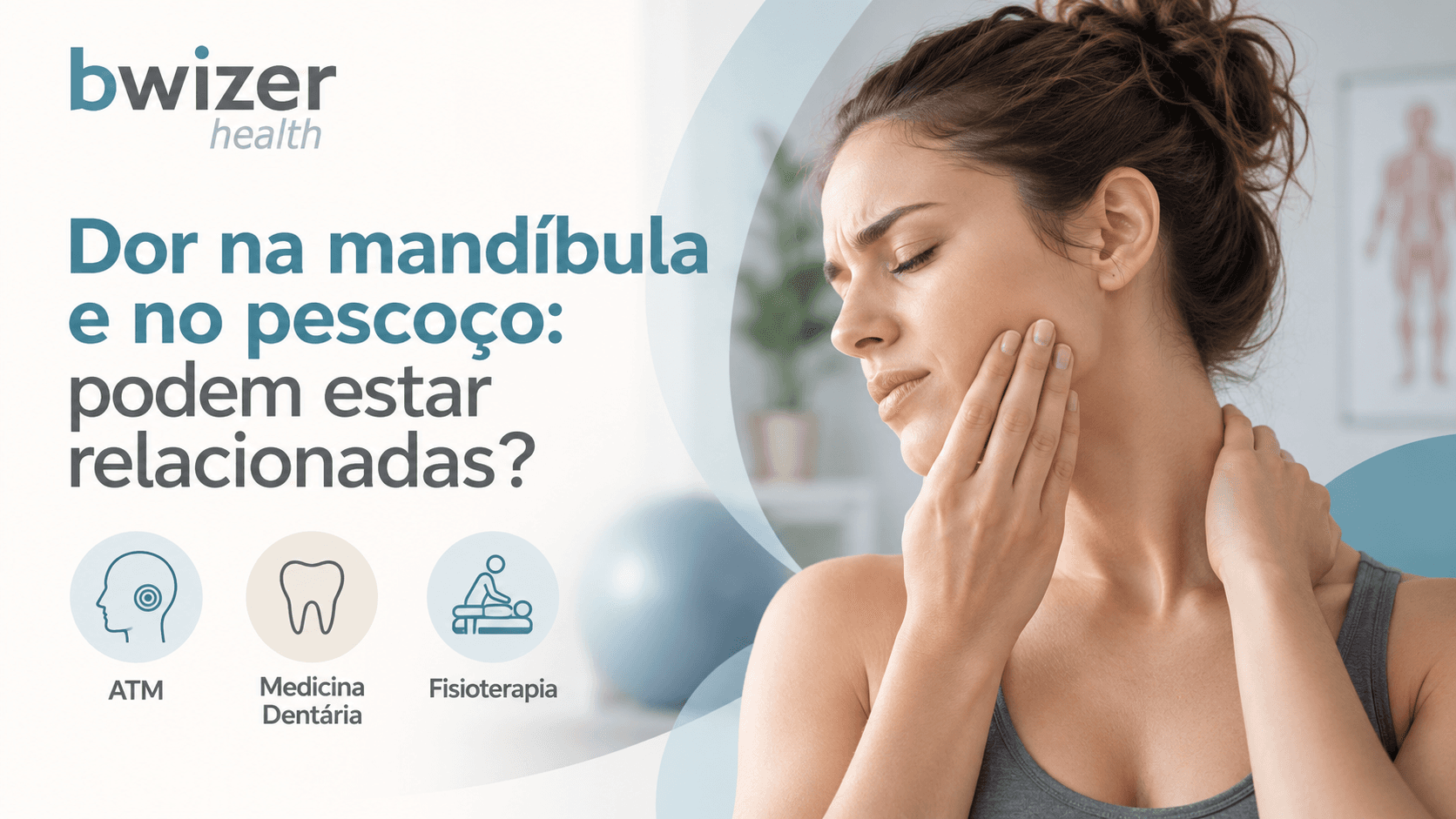
Facial and jaw pain and stress: what do they have in common?

Have you ever felt that your jaw was tired after a difficult day at work? Or noticed that your jaw felt “heavy” or that you were clenching your teeth while concentrating on a task? In this article, we explore how pain, stress and tension can affect your face. Here you will find a practical guide to understanding how Physiotherapy can help break the cycle of orofacial pain, temporomandibular disorders and stress.
Have you ever felt that your jaw was tired after a difficult day at work? Or noticed that your jaw felt “heavy” or that you were clenching your teeth while concentrating on a task? You are not alone, and your body may simply be responding to accumulated strain through mechanisms that science can now explain more clearly.
In this article, we explore how pain, stress and tension can affect your face and why the solution may involve more than simply treating your teeth. Here you will find a practical guide to understanding how Physiotherapy can help break the cycle of orofacial pain, temporomandibular disorders and stress.
What is a Temporomandibular Disorder?
Temporomandibular Disorders (TMD) affect the jaw joints and the muscles we use for chewing and speaking. This is a common problem and is the second most common chronic musculoskeletal pain condition (orofacial pain), after low back pain.
Facial pain can affect sleep, eating and even communication. TMD can also coexist with pain, stiffness or other changes in the cervical spine.
How do stress and anxiety influence this pain?
The first key idea is that the jaw and a person’s emotional state are closely connected. Stress and anxiety do not cause pain “magically”, but they may be associated with involuntary oral behaviours such as awake bruxism (clenching the teeth during the day).
Unlike chewing, which is an intermittent movement, clenching involves sustained muscle contraction. This sustained activity can contribute to overload and fatigue of the jaw muscles and may be associated with pain or sensitivity in the facial region. This can create a cycle in which tension contributes to pain and pain itself becomes a new source of stress, potentially progressing to chronic pain in some cases.
When pain persists, some people may develop changes in the way the nervous system processes pain, a phenomenon known as central sensitisation. This is one of the mechanisms that may contribute to persistent symptoms, although it is not present in everyone with TMD.
Over time, the nervous system may therefore become more sensitive, and what initially occurred as a response to stress can develop into a cycle of persistent pain that affects sleep, eating and even mood and general well-being.
The myth of treating the problem in isolation
A common misconception is that the solution simply involves treating the teeth or using an occlusal splint. Many people assume that the problem is purely related to the mouth, when in fact other regions, such as the neck/cervical spine, may also be involved.
The available evidence shows that:
- People with TMD frequently experience neck pain and stiffness;
- Cervical problems may influence jaw pain (sometimes referred to simply as “jaw pain”);
- Headaches, including migraines and tension-type headaches, often coexist with jaw tension.
Therefore, treating only the jaw while overlooking a possible cervical dysfunction may be one of the reasons why some people do not achieve lasting relief.
What actually helps in practice?
What tends to help in practice is a multimodal and active approach, with Physiotherapy as a first-line treatment, as recommended by international clinical guidelines, frequently in collaboration with Dentistry.
More than simply providing massage, Physiotherapy helps people identify their triggers and improve coordination between the muscles of the face and neck. Through specialised manual techniques and motor control exercises, it is possible to reduce pain sensitivity and restore mobility and function.
What can you do today?
You can start today with a simple and safe strategy to reduce the strain on your facial muscles through postural education and body awareness: adopting a resting jaw position throughout the day.
How to do it:
- Gently place the tip of your tongue against the roof of your mouth, just behind your front teeth (in the area of the palatal ridges).
- Keep your upper and lower teeth slightly apart.
- Allow your lips to touch gently without forcing them together.
- Let your shoulders drop, relax your neck and breathe calmly through your nose.
When should you seek help?
This information can provide guidance, but it does not replace an individual clinical assessment by a healthcare professional. You should seek specialised advice from a Physiotherapist, Doctor or Dentist if you experience persistent facial pain, if your jaw “locks” when opening your mouth, if you experience painful clicking, or if headaches are interfering with your normal daily activities.
Additionally, if you are already being followed by a Dentist, speak to them about whether Physiotherapy could be appropriate for your condition.
Book a specialised Physiotherapy assessment. Persistent tension or pain should not be regarded as normal; conservative approaches can help reduce symptoms so that you can return to eating, speaking and living without limitations. Book your appointment at Bwizer Health.
This article is for informational purposes only and does not replace an individual assessment by a healthcare professional.
References
Bednarczyk, V., Proulx, F., & Paez, A. (2024). The effectiveness of cervical rehabilitation interventions for pain in adults with myogenic temporomandibular disorders: A systematic review and meta-analysis. Journal of Oral Rehabilitation, 51(6), 1091–1107.
Bizzarri, P., Manfredini, D., Koutris, M., Bartolini, M., Buzzatti, L., Bagnoli, C., & Scafoglieri, A. (2024). Temporomandibular disorders in migraine and tension-type headache patients: a systematic review with meta-analysis. Journal of Oral & Facial Pain and Headache, 38(2), 11–24.
Busse, J. W., Casassus, R., Carrasco-Labra, A., Sadeghirad, B., Yao, L., Wang, L., ... & Guyatt, G. H. (2023). Management of chronic pain associated with temporomandibular disorders: a clinical practice guideline. BMJ, 383, e076227.
de Oliveira-Souza, A. I. S., Ferro, J. K. O., Barros, M. M. M. B., & de Oliveira, D. A. (2020). Cervical musculoskeletal disorders in patients with temporomandibular dysfunction: A systematic review and meta-analysis. Journal of Bodywork and Movement Therapies, 24(4), 84–101.
González, I. B., Montero, J., Polo, C. G., & Peláez, B. P. (2025). Evaluation of the relationship between bruxism and/or temporomandibular disorders and stress, anxiety, depression in adults: A systematic review and qualitative analysis. Journal of Dentistry, 156, 105707.
Graham, D. A., Lövgren, A., Häggman-Henrikson, B., Peck, C. C., Manfredini, D., & Saracutu, O. I. (2026). Management of awake bruxism: a systematic review. BMC Oral Health, 26(1), 55.
Justribó-Manion, C., Mesa-Jiménez, J., Caballero-Ruiz-de-la-hermosa, C., Zuil Escobar, J. C., & Armijo-Olivo, S. (2024). Is low back pain a risk/prognostic factor for the development and/or progression of temporomandibular disorders? A systematic review with meta-analysis. Journal of Oral Rehabilitation, 51(3), 427–454.
La Touche, R., Martínez García, S., Serrano García, B., Proy Acosta, A., Adraos Juárez, D., Fernández Pérez, J. J., ... & Suso-Martí, L. (2020). Effect of manual therapy and therapeutic exercise applied to the cervical region on pain and pressure pain sensitivity in patients with temporomandibular disorders: A systematic review and meta-analysis. Pain Medicine, 21(10), 2373–2384.
Pelai, E. B., de Castro-Carletti, E. M., Tavares, L. F., Michelotti, A., Pitance, L., Rodrigues-Bigaton, D., ... & Armijo-Olivo, S. (2026). Manual therapy and exercise targeted to the neck and orofacial regions for patients with orofacial pain: a systematic review and meta-analysis. Disability and Rehabilitation, 48(2), 286–330.
Qu, J., Qian, Y., Zhang, Y., Chen, B., Wang, R., Bao, J., ... & Lu, Y. (2025). Efficacy of manipulation and therapeutic exercise applied to the neck region of patients with temporomandibular disorders: A systematic review and meta-analysis. Journal of Stomatology, Oral and Maxillofacial Surgery, 126, 102530.